
Kedarnath Temple Story: Why Shiva Hid from the Pandavas and Became Panch Kedar
Read the Kedarnath temple story of Shiva, the Pandavas and Panch Kedar—carefully separating sacred tradition, scripture and spiritual meaning.
What you will discover
- The direct answer to why Shiva hid from the Pandavas and why his buffalo form is linked with Kedarnath.
- How the five Panch Kedar shrines map to five manifestations of Shiva in the Garhwal Himalayas.
- Why the familiar Pandava legend and the Shiva Purana account of Nara–Narayana are related but distinct sacred narratives.
- What is living pilgrimage tradition, what has textual support and what is a modern spiritual interpretation.
- How the story turns victory, guilt, persistence and forgiveness into a demanding path of inner change.
Imagine winning the war for which you had prepared your whole life—and discovering that victory has not brought peace. The throne is yours, justice has been restored, and yet the faces of teachers, cousins and friends lost on the battlefield return whenever the court becomes quiet. This is where the Kedarnath temple story begins: not in triumph, but in the unbearable stillness after triumph.
The Pandavas turn toward Shiva, hoping for release from the burden of bloodshed. But Shiva does not appear when summoned. He withdraws into the Himalayas, takes the form of a wild buffalo and disappears into the earth. Bhima reaches for him; the divine body manifests across five mountain shrines; and the Pandavas’ search becomes the sacred geography known as Panch Kedar.
It is a magnificent story, but it deserves more care than a hurried retelling. Kedarnath carries several narrative layers: the regional Panch Kedar tradition of the Pandavas, a Shiva Purana account centred on the sages Nara and Narayana, and later devotional interpretations of what the stories mean. This guide holds those layers together without pretending they are identical. Sacred tradition is honoured as sacred tradition; textual claims are identified as textual claims; and reflection is offered as reflection, not as a verse invented in scripture’s name.
The Kedarnath temple story in one minute
According to the best-known Panch Kedar tradition, the Pandavas sought Shiva after the Mahabharata war because they carried the guilt of killing relatives and revered elders. Shiva did not wish to grant immediate absolution, so he hid in the Himalayas in the form of a buffalo. Bhima recognised him. As Shiva began sinking into the earth, Bhima seized the animal, but its form vanished and reappeared in five places: the hump at Kedarnath, arms at Tungnath, face at Rudranath, middle or navel at Madhmaheshwar, and matted hair at Kalpeshwar. The Pandavas worshipped Shiva at these places, and the five shrines became Panch Kedar.
The answer to “Why did Shiva hide?” is therefore not that the deity was frightened of the brothers. Within the moral language of the legend, Shiva refuses to make forgiveness effortless. The Pandavas must move beyond the argument that the war was necessary. They must acknowledge consequence, search with humility and endure before grace becomes possible. The hiding is part of their purification.
Three sacred story streams around Kedarnath
A tirtha is more than a location on a map. It is a crossing place where landscape, memory, text, ritual and the lives of pilgrims meet. Kedarnath has been approached for centuries, so no single modern webpage can own its meaning. The stories that devotees hear today grew through different forms of transmission: Purana, regional mahatmya, oral narration, temple practice and family memory.
| Narrative stream | Core story | How to read it responsibly |
|---|---|---|
| Panch Kedar pilgrimage tradition | The Pandavas pursue Shiva in buffalo form; five manifestations become five shrines. | A living Garhwal tradition presented by official state and temple sources, with details that vary by telling. |
| Shiva Purana, Koti Rudra Samhita | Nara and Narayana worship Shiva at Badarikashrama and ask him to remain in Kedara as Kedareshvara. | A textual Shaiva account explaining Kedarnath’s Jyotirlinga identity; distinct from the buffalo pursuit. |
| Devotional interpretation | Shiva’s concealment represents the difficulty of honest repentance; the mountain journey represents inner purification. | A meaningful contemporary reflection, but not a claim that scripture states every interpretation in these exact words. |
Luke Whitmore’s peer-reviewed study of Kedarnath is useful precisely because it does not reduce the shrine to one frozen “myth”. He shows how the pursuit of Shiva, the unusual rock form worshipped in the temple and the Himalayan environment continue to shape one another in lived religion. This scholarly view does not drain the story of devotion. It helps us understand why a sacred place can carry more than one authoritative memory without becoming incoherent.
After Kurukshetra: the burden that victory could not remove
The Mahabharata never allows war to remain a simple contest between heroes and villains. Dharma is defended, but the cost is devastating. Grandfather Bhishma falls. Drona, teacher to princes on both sides, is killed. Karna dies before the truth of his birth can restore the broken family. Sons, allies and multitudes of unnamed soldiers disappear. The Pandavas inherit a kingdom filled with absence.
In the Kedarnath tradition, this aftermath becomes the reason for pilgrimage. The brothers are not presented as criminals escaping justice, nor as victors automatically cleared by a righteous cause. They seek atonement because moral injury remains even when action was taken under duty. Their remorse is called gotra-hatya in some regional tellings: the grave burden of destroying one’s own kin or lineage.
That distinction gives the story unusual depth. Remorse is not the same as self-hatred. It is the refusal to become numb. The Pandavas do not abandon the kingdom or deny their duty; they recognise that responsibility also includes what comes after action. They seek a form of grace that can be received only after truth is faced.
Kedarnath begins where the language of victory ends: at the moment the soul asks what it must do with the consequences.
Mandir Vedas reflection
Why did Lord Shiva hide from the Pandavas?
Official tellings say Shiva repeatedly eluded the brothers. Some versions place a moment of concealment at Guptkashi—literally associated with the “hidden Kashi”—before the pursuit moves higher into the mountains. The brothers want darshan, but the Lord of Kedara refuses to become an answer obtained by insistence alone.
Theologically, Shiva is not hiding because human beings have overpowered him. Concealment is one of the story’s teachings. The Pandavas are accustomed to solving danger through skill, force, strategy and divine assistance. None of those methods can command forgiveness. The sought-after deity remains free. A pilgrimage cannot force grace; it can only prepare the pilgrim to receive it.
Shiva’s refusal also protects repentance from becoming transactional. If the brothers could perform one ritual, receive one blessing and declare the past cancelled, remorse would be reduced to a fee. Instead, they must undertake a search. The Himalayas lengthen the distance between request and response. Fatigue dismantles entitlement. Each missed encounter asks whether they desire genuine transformation or merely relief from discomfort.
This interpretation is not a quotation from the Mahabharata or Shiva Purana. It is a devotional reading of the regional legend. Stating that openly matters. Reverence does not require us to disguise reflection as ancient text. On the contrary, transparency allows scripture, tradition and the modern conscience to speak in their proper voices.
Bhima, the buffalo and the moment the earth opens
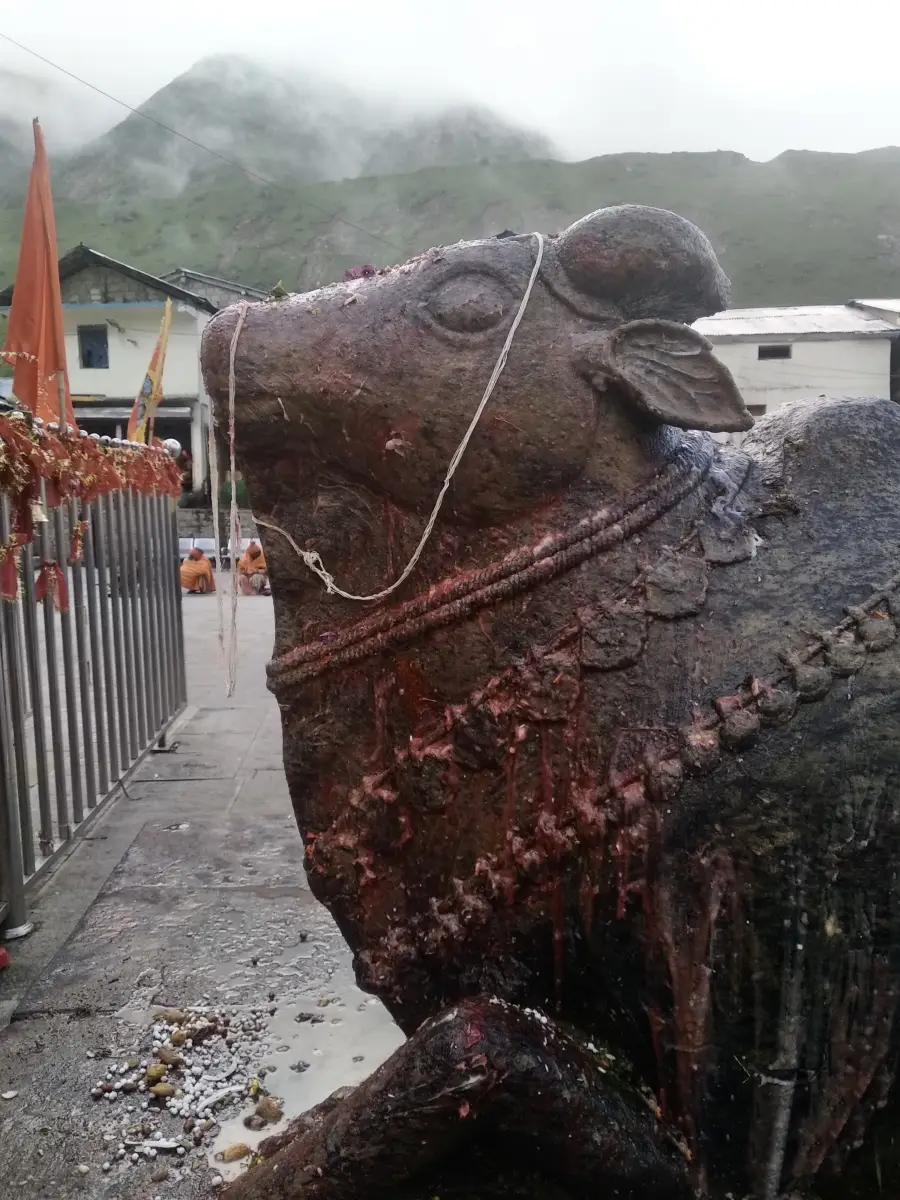
Shiva takes the form of a buffalo and mingles with a herd. In some versions the animal is called a bull or identified with Nandi; in others it is a mahisha, a buffalo. The broad narrative remains the same even when the animal term shifts in popular English retellings. Bhima, whose strength has moved mountains in the epic imagination, senses that one creature is not ordinary.
A vivid oral telling says Bhima stretches his legs across the valley so the herd must pass below him. The ordinary animals continue; the disguised Shiva hesitates or tries to dive into the ground. Bhima lunges and catches the hind part, hump or tail, depending on the version. The form cannot be held as an animal body. It enters the mountain and manifests across the Garhwal Himalayas.
The scene is often told as a chase, but its spiritual power lies in the limit placed on Bhima’s strength. He can identify the buffalo. He can reach for it. He cannot possess Shiva. The divine body becomes landscape. What the strongest Pandava tries to hold in one place must instead be approached through five separate journeys.
 Real photograph
How Shiva’s form became the five Panch Kedar temples
Uttarakhand Tourism and the Shri Badarinath Kedarnath Temple Committee present the fivefold manifestation as the heart of Panch Kedar. Each shrine is associated with a part or aspect of Shiva’s buffalo form. The sequence is a sacred map of Garhwal rather than merely a list of temples.
| Panch Kedar shrine | Traditional manifestation | Devotional impression |
|---|---|---|
| Kedarnath | Hump or back | The weight-bearing centre; endurance, steadiness and the burden brought before Shiva. |
| Tungnath | Arms | Action and strength offered back to the divine rather than used for self-importance. |
| Rudranath | Face | The encounter with Shiva’s fierce, compassionate presence. |
| Madhyamaheshwar | Middle, belly or navel | The inner centre from which life, balance and digestion—physical and moral—are imagined. |
| Kalpeshwar | Matted hair or locks | The ascetic Shiva, whose jata carries the imagery of wildness, restraint and the sacred river. |
The final column offers contemporary devotional impressions, not fixed scriptural definitions. Traditional mappings themselves also show small regional variations—for example, whether Madhyamaheshwar is described as the belly, middle or navel, and whether Kalpeshwar is described as hair alone or hair with the head. Responsible storytelling preserves the stable pattern while admitting variation.
A Panch Kedar pilgrimage is consequently a story walked in stages. Kedarnath may be the most widely known, but the five shrines belong to one sacred imagination. The dispersed body refuses to let devotion remain concentrated only in the most famous destination. Shiva is encountered through different valleys, terrains and qualities of attention.
Why is the hump worshipped at Kedarnath?
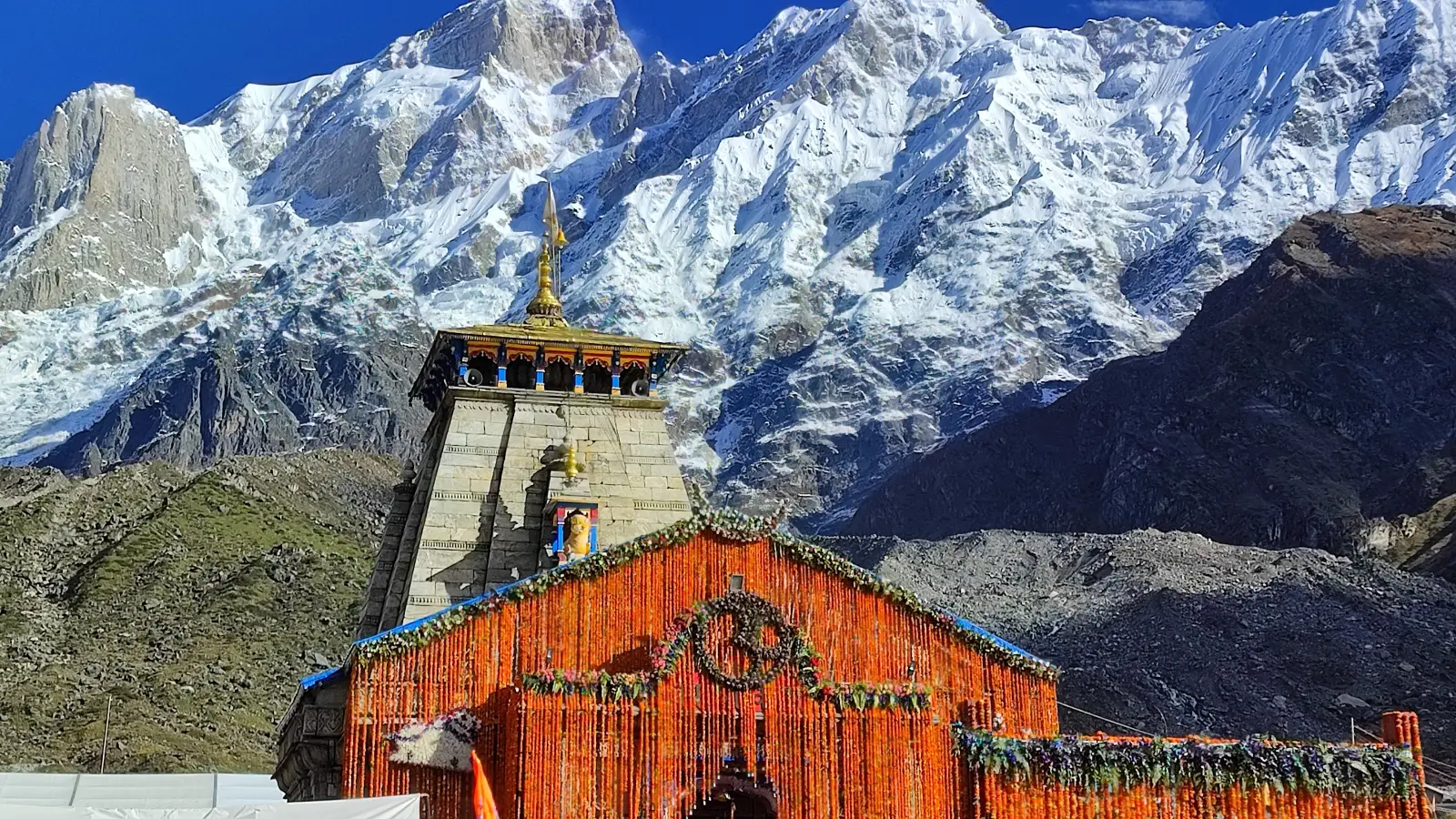
Inside Kedarnath, Shiva is worshipped not through a smoothly carved cylindrical form but through a large, irregular, conical rock. Temple tradition identifies this form with the back or hump that remained when Shiva entered the earth. The official temple committee describes the rock as a self-manifested Jyotirlinga in Sadashiva form.
The hump is a powerful image because it bears weight. A buffalo’s back carries labour; the mountain carries snow; the temple has carried centuries of weather and prayer. Pilgrims arrive carrying names, promises, grief and gratitude. To read the hump as an image of burden offered to Shiva is a modern spiritual interpretation, but it arises naturally from the form and the story.
Whitmore’s research draws attention to the way Kedarnath’s linga resists a simple separation between icon and mountain. It appears rocky, ambiguous and deeply Himalayan. That observation helps explain why photographs of the temple exterior can never fully describe the encounter. At Kedarnath, the surrounding stone, glacier, weather and worshipped form participate in one field of meaning.
The Nara–Narayana story: how Kedareshvara remained in the Himalayas
The Shiva Purana’s Koti Rudra Samhita gives Kedarnath another origin account. Nara and Narayana, associated with Vishnu and the ascetic landscape of Badarikashrama, worship Shiva through an earthen linga. Pleased with their sustained devotion, Shiva offers a boon. They do not ask for private power. They ask him to remain in Kedara for the welfare of devotees. Shiva stays as the Jyotirlinga Kedareshvara.
This story and the Panch Kedar pursuit answer different devotional questions. The Nara–Narayana account explains Shiva’s gracious abiding presence at Kedara. The Pandava account explains why the form is associated with the buffalo’s hump and why one story is distributed across five shrines. One begins with patient worship and a boon for the world; the other begins with moral injury and a difficult search for forgiveness.
Together they reveal two movements of grace. In one, devotees call with disciplined love and Shiva agrees to remain. In the other, seekers pursue a hidden Shiva until they become capable of meeting him. Presence and concealment are not contradictions here. A deity may be eternally present at the tirtha yet hidden from the impatient mind.
What is scripture, what is tradition and what is history?
Devotional writing becomes stronger, not weaker, when it names its categories. The Shiva Purana is a sacred textual source for the Nara–Narayana and Kedareshvara account. The Pandava–buffalo narrative is firmly established in temple and regional pilgrimage tradition and is repeated by official institutions. Academic study examines how these narratives function in the social and ritual life of Kedarnath. Archaeology and architectural history ask a different set of questions about buildings, materials and chronology.
The Mahabharata supplies the moral world and characters of the Pandavas, their war and their later movement through sacred landscapes. But the familiar five-part Panch Kedar chase should not be casually introduced as a verbatim scene from the epic unless a writer can name the passage and recension being used. It is safer and more accurate to call it a post-war Pandava tradition rooted in the sacred geography of Garhwal.
Likewise, statements such as “the Pandavas built the temple” belong to long-standing sacred and institutional tradition. Uttarakhand Tourism says the existing structure is believed to be more than twelve centuries old and associates its establishment with Adi Shankaracharya around the eighth century. Those claims should not be converted into a precise archaeological date without evidence. Faith may remember a founder; history may study several construction phases. Both can be discussed without pretending they use the same method.
- Tradition tells us how generations of devotees have understood a place.
- Scripture lets us identify a story within a particular textual lineage.
- History asks what evidence can establish about dates, institutions and material change.
- Spiritual interpretation asks how the story may illuminate a devotee’s life today.
- Respect means neither dismissing tradition nor presenting every later detail as documented ancient history.
Seven spiritual lessons in the Kedarnath story
- A righteous cause does not remove the need for moral reflection. The Pandavas’ victory does not silence their conscience.
- Forgiveness cannot be commanded. Shiva’s concealment preserves divine freedom and challenges the entitlement of the seeker.
- Remorse must become movement. The brothers do not remain in the palace discussing guilt; they begin a demanding pilgrimage.
- Strength has limits. Bhima can catch the buffalo form, but he cannot contain Shiva or make the divine remain in one grasp.
- Grace may arrive in fragments. Panch Kedar teaches that one encounter can unfold across several places, stages and qualities of attention.
- The landscape participates in revelation. Shiva does not merely stand before the mountains; in Kedarnath’s imagination, rock, body and sacred presence meet.
- Atonement points forward. The purpose is not endless self-condemnation but a life reshaped by truth, humility and responsibility.
These lessons should not become a new set of slogans. The story’s force comes from tension: the Pandavas are both heroic and burdened; Shiva is both present and hidden; Bhima is both immensely strong and unable to hold the divine; the body both disappears and becomes more widely manifest. Spiritual maturity often begins when we stop demanding that one side of such a tension erase the other.
For someone living with regret, Kedarnath offers neither denial nor despair. The past matters. Consequences matter. Yet the story would not have survived as a pilgrimage narrative if its only message were condemnation. The very existence of Panch Kedar announces that a path remains. One can search, bow, make amends where possible and carry a more truthful life forward.
How to carry the Kedarnath story into your own prayer
You do not need to imitate the Pandavas’ dramatic journey to receive the story’s ethical invitation. Begin by naming what you are carrying without embellishment. Is it grief, guilt, anger, gratitude, a promise to your parents or a decision that has been postponed? A clear Sankalp is not a demand placed on Shiva. It is a disciplined way of placing your own mind before the truth.
If you travel to Kedarnath, let the story slow you down. Notice Nandi at the approach. Remember that the form inside is connected in tradition with the mountain and the buffalo’s hump. If you continue toward the other Panch Kedar shrines, do not treat them as secondary boxes on a checklist. Each is a separate encounter within the same sacred body.
If you cannot travel, a home practice can still be sincere. Clean a quiet place, light a lamp safely, speak the names of those included in your prayer, chant Om Namah Shivaya and make one concrete promise of better conduct. A ritual offered through another person should support—not replace—your own remembrance, responsibility and compassion.
Mandir Vedas provides an independent devotional service for families who wish to offer a personalised Kedarnath Archana with submitted names and gotra details, followed by temple-premises video proof. Mandir Vedas is not the Shri Badarinath Kedarnath Temple Committee and does not claim official temple-administration affiliation. Devotees seeking official temple pujas or donations should use the committee’s own portal.
The Kedarnath temple story endures because it does not flatter the seeker. It asks whether we want pardon without transformation, darshan without patience, or blessing without responsibility. Shiva’s disappearance refuses those shortcuts. Yet his fivefold manifestation also refuses hopelessness. The hidden Lord becomes more present than before—across valleys, shrines and generations of pilgrims who continue the search.
Perhaps that is Kedarnath’s final tenderness. What seems like divine refusal becomes a larger map of grace. What Bhima cannot hold in one grasp is revealed through a whole landscape. What the Pandavas cannot settle in the language of victory becomes a pilgrimage. And what a devotee cannot change in the past may still become the beginning of a more conscious life.
Frequently asked questions
What is the main story of Kedarnath Temple?+
In the best-known Panch Kedar tradition, the Pandavas sought Shiva after the Mahabharata war to atone for the bloodshed. Shiva hid as a buffalo and entered the earth when Bhima recognised him. His hump manifested at Kedarnath, while other parts appeared at Tungnath, Rudranath, Madhyamaheshwar and Kalpeshwar.
Why did Lord Shiva hide from the Pandavas?+
The tradition says Shiva did not wish to grant them immediate darshan or easy absolution after the war. Devotionally, his concealment is understood as requiring the Pandavas to move through remorse, effort and humility before receiving grace. This interpretation should not be confused with a direct scriptural quotation.
Did Shiva become a bull or a buffalo at Kedarnath?+
Official Panch Kedar accounts from Uttarakhand Tourism and the temple committee generally use buffalo. Popular English retellings sometimes say bull or identify the form with Nandi. The narrative is an oral and regional tradition, so details vary; the stable core is Shiva’s animal disguise and fivefold Himalayan manifestation.
Which part of Shiva is worshipped at Kedarnath?+
Kedarnath is associated with the hump or back of Shiva’s buffalo form. The sanctum contains an irregular conical rock worshipped as the self-manifested Jyotirlinga in Sadashiva form.
What are the five Panch Kedar temples?+
They are Kedarnath (hump), Tungnath (arms), Rudranath (face), Madhyamaheshwar (middle, belly or navel) and Kalpeshwar (matted hair). Small variations in wording occur across regional tellings.
Is the Kedarnath story written in the Mahabharata?+
The Pandavas and their moral world come from the Mahabharata, and the epic contains pilgrimage narratives. The familiar buffalo pursuit and five-part Panch Kedar mapping are best described as later regional pilgrimage tradition rather than casually presented as a verbatim scene from the core epic.
What does the Shiva Purana say about Kedarnath?+
The Koti Rudra Samhita’s Kedareshvara chapter tells that Nara and Narayana worshipped Shiva at Badarikashrama. When Shiva offered a boon, they asked him to remain in Kedara for devotees, and he stayed as the Jyotirlinga Kedareshvara. The chapter also refers to the Pandavas worshipping there.
What is the spiritual meaning of Shiva hiding?+
A common devotional reading is that grace cannot be commanded and remorse cannot be bypassed. The seeker must release entitlement, face consequence and become inwardly prepared. This is a modern interpretation of the story’s moral shape, not a claimed quotation from scripture.
Why is Kedarnath connected with forgiveness?+
The Pandavas’ search is remembered as an act of atonement after the Mahabharata war. Kedarnath therefore became a powerful landscape for prayers involving remorse, responsibility and release. Hindu traditions do not reduce forgiveness to a transaction; sincere worship is expected to accompany ethical change.
Can I pray with the Kedarnath story without travelling?+
Yes. A devotee can light a lamp safely, speak a clear Sankalp, chant Om Namah Shivaya and commit to one act of repair or compassion. If arranging a remote Archana, verify who provides it and whether the service clearly distinguishes itself from the official temple administration.
Sources and further reading
Travel requirements and temple schedules can change. These official sources were checked while preparing this guide.
- Shri Badarinath Kedarnath Temple Committee — official Kedarnath history and Panch Kedar tradition
- Uttarakhand Tourism — official Panch Kedar overview
- Uttarakhand Tourism — official Kedarnath destination overview
- Incredible India — Government of India Kedarnath overview
- Shiva Purana, Koti Rudra Samhita, Chapter 19 — Kedareshvara translation with Sanskrit text reference
- Luke Whitmore — Mountain, Water, Rock, God: Understanding Kedarnath in the Twenty-First Century (open-access, peer reviewed)
- University of California Press — Lord of Kedar, open-access chapter