
Kedarnath Temple Darshan Timings: Puja, Aarti, Etiquette and What to Expect
Check Kedarnath Temple darshan timings carefully, understand official puja and aarti booking, and prepare for the queue, threshold and worship with respect.
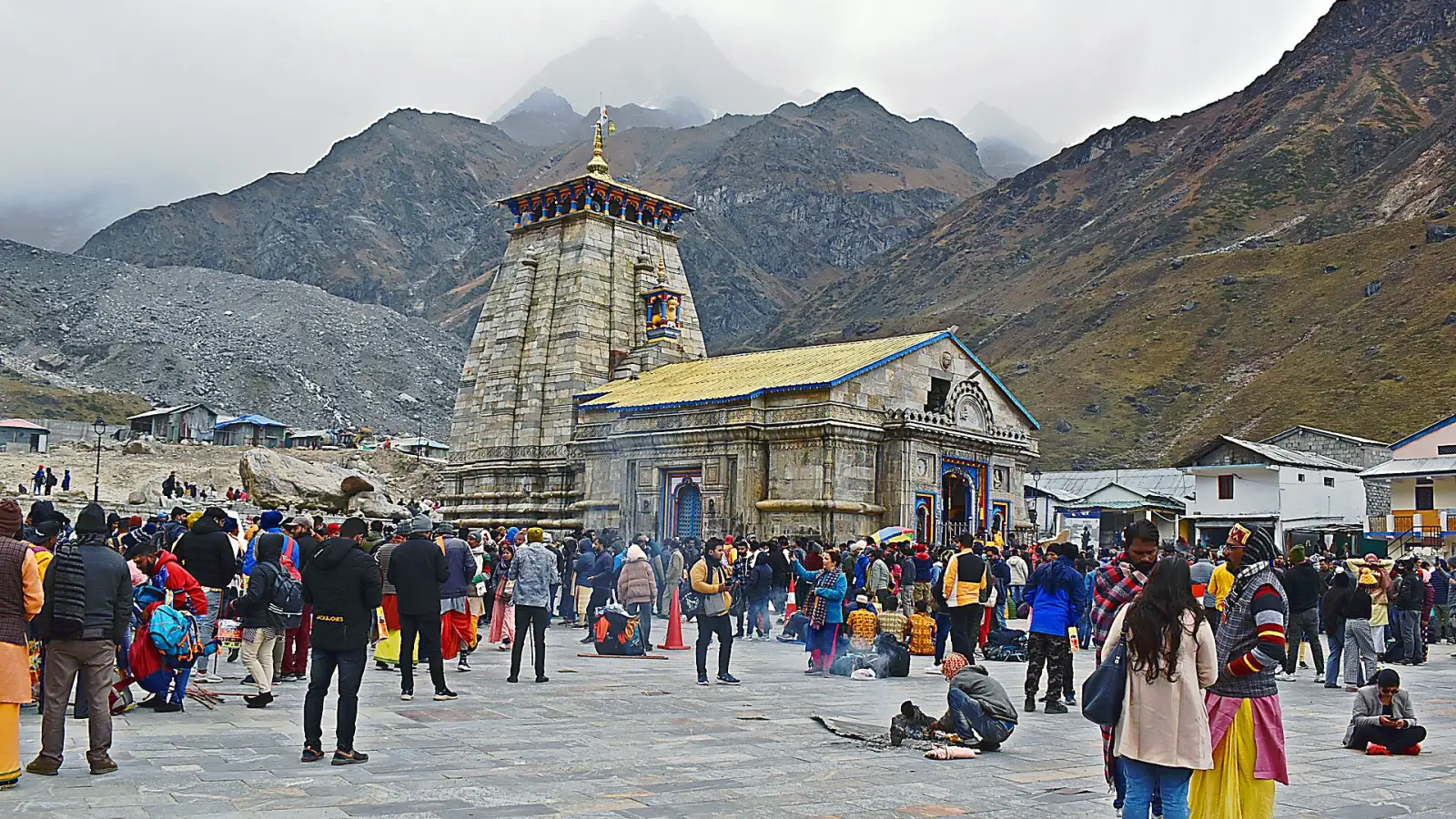
What you will discover
- The 2026 pilgrimage season opened on 22 April, but the official registration portal does not currently publish a complete fixed daily darshan timetable.
- How to verify the day’s darshan sessions, queue token and weather-related changes without relying on an outdated blog schedule.
- The difference between general darshan, an attending BKTC puja and a name-and-gotra puja performed when the pilgrim is absent.
- A practical journey from registration and queue to the threshold, sanctum instructions and respectful exit.
- Current official puja examples, booking conditions, identification requirements and common mistakes to avoid.
Before dawn at Kedarnath, the queue is a line of breath and wool. Pilgrims cup their hands around tea, bells move somewhere beyond the mist, and the stone temple appears and disappears as cloud crosses the valley. After hours of travel, the moment inside may be brief. A priest gestures, the line advances, and suddenly the mountain journey has narrowed to one act of seeing.
That brevity surprises first-time pilgrims. Kedarnath darshan is not a museum visit with a predictable entry slot and unlimited time. It is a living ritual day shaped by worship, crowd management, mountain weather and instructions at the shrine. Good preparation does not make the experience mechanical. It protects the small amount of attention you have when the doorway finally opens before you.
This guide gives the most careful current answer to Kedarnath Temple darshan timings, explains official puja and aarti arrangements, and walks with you from registration to respectful exit. Where an exact time is not officially published, we say so instead of turning an old seasonal routine into a promise.
The direct answer: what are Kedarnath Temple darshan timings now?
Kedarnath Temple opened for the 2026 pilgrimage season on 22 April 2026, according to the Uttarakhand government’s official Yatra Registration and Tourist Care portal. When this article was reviewed on 7 August 2026, that same official Kedarnath page displayed the detailed daily temple opening, closing, aarti and bhog times as “will be announced soon.” It would therefore be misleading to guarantee one fixed general-darshan timetable from a third-party article.
The official Shri Badarinath Kedarnath Temple Committee terms do provide two useful anchors for booked worship. Pilgrims attending early-morning Abhishek pujas should obtain their allotted time from the temple puja counter one day before. The terms also say evening aarti starts at about 6 pm during summer and receipt holders should arrive 15 to 20 minutes early. These are puja instructions, not a guarantee that the general queue will operate identically every day.
For the actual day, confirm the current general-darshan sessions with BKTC, the official registration system and the on-site darshan or puja counter. Weather, ritual requirements, crowd control, special observances, eclipses and local safety directions can change access. Treat exact schedules on travel blogs as planning clues, not temple-issued appointments.
Kedarnath darshan: quick facts for 2026
| Question | Current careful answer |
|---|---|
| Is Kedarnath Temple open in 2026? | Yes. The official Uttarakhand registration portal lists 22 April 2026 as the opening date for this season. |
| What are the exact daily general-darshan timings? | The official Dham page did not publish the complete daily timetable when checked on 7 August 2026. Reconfirm on the day. |
| Is general darshan paid? | General temple darshan is not the same as a paid puja. Official pujas, aartis and paths have separate receipts and charges. |
| Is Yatra registration required? | Yes. The Uttarakhand portal directs pilgrims to register, create the tour, add pilgrim details, download the QR letter and present it for verification. |
| Do I need a darshan token? | The official registration portal tells pilgrims to collect a Dham darshan slot token. Follow the current local collection process. |
| Can I book a puja online? | BKTC provides an official online puja service. Registration, an Indian mobile number, the receipt and valid photo ID are required under current terms. |
| When is evening aarti? | BKTC terms say around 6 pm in summer for receipt holders, who should report 15–20 minutes early. Recheck the current slot. |
| Is touching the sacred form guaranteed? | No. Never assume sparsh, prolonged access, photography or a particular ritual interaction. Follow the priest and security instructions in force. |
| Where should helicopter tickets be booked? | Only through the official IRCTC HeliYatra channel linked by the Uttarakhand and BKTC portals. |
What darshan means before we discuss the clock
Darshan is often translated as “seeing,” but in devotional life it is more reciprocal than sightseeing. The pilgrim beholds the deity and enters a moment understood as being seen in return. This is why a few seconds can carry more emotional weight than a long tour. The purpose is not to inspect every detail of the sanctum. It is to become present enough for encounter.
At Kedarnath, that encounter begins long before the inner chamber. The difficult approach, the Mandakini valley, Nandi facing Shiva, the cold stone threshold and the gathered call of “Har Har Mahadev” all prepare attention. The temple’s architecture moves the pilgrim from Himalayan openness toward a small, concentrated sacred space.
A puja is related but different. General darshan means entering the managed pilgrim flow to behold the sacred presence. A booked puja or aarti is a specific ritual service governed by a receipt, available slot, participation rules and the temple’s current schedule. Confusing the two is a common source of disappointment.
Three different ways pilgrims worship at Kedarnath
| Form of worship | What it means | What to arrange |
|---|---|---|
| General darshan | You join the current darshan flow, approach the sacred form and follow the movement and instructions inside. | Yatra registration, QR letter, ID, darshan slot token and the day’s official access information. |
| Attending an official BKTC puja | You or the permitted group attend a named puja, aarti or path at an allotted time. | Official advance booking where available, receipt, government photo ID and confirmation at the puja counter. |
| Official puja when you cannot attend | BKTC terms state that the chief priest, vedpathi or acharya may perform the booked puja with the pilgrim’s name and gotra when the pilgrim is absent. | Submit accurate name and gotra details through the official service and retain the receipt. |
These categories should not be blurred by the phrase “VIP darshan.” A paid ritual receipt is not a universal promise of queue-free entry or unlimited sanctum time. Avoid anyone who claims to override security, weather or temple instructions. Use BKTC’s official channels for official temple pujas and verify what the particular receipt includes.
How Kedarnath timings really work: confirmed, typical and changeable
Many online guides print a neat morning session, an afternoon closure and an evening session. Such routines may resemble practice during parts of a season, but they are not enough to establish today’s schedule. A living Himalayan shrine may pause general entry for ritual, bhog, cleaning, crowd movement, weather or a special observance.
Use a three-level timing system. First, “officially confirmed” information comes from BKTC or the Uttarakhand government and includes the seasonal opening date and the terms attached to a booked puja. Second, a “typical seasonal pattern” can help you decide whether to stay overnight or queue early, but it remains provisional. Third, “day-of instruction” is the final authority for your visit.
| Timing level | Examples | How to use it |
|---|---|---|
| Officially confirmed | 2026 opening date; official puja receipt conditions; early-morning puja slot procedure; approximate summer aarti guidance. | Plan the journey and booking around it, then recheck for amendments. |
| Typical but variable | Morning and evening worship periods, ritual pauses and heavier queues on holidays or auspicious days. | Use for broad planning only; do not promise it to family members as a fixed appointment. |
| Day-of instruction | Queue opening, token window, security hold, weather delay, photography rule, sparsh or access arrangement. | Follow this even when it differs from a website, old video or message from an agent. |
If your visit depends on a particular puja, do not arrive assuming that an online payment alone completes the logistics. BKTC’s terms tell early-morning Abhishek participants to obtain the allotted slot at the puja counter one day before. Build time for that confirmation and keep the original or accessible booking receipt with your ID.
The darshan journey, step by step
1. Before reaching Kedarnath
Register on the Uttarakhand Yatra portal, create the tour, add every pilgrim correctly and carry the downloaded QR-coded registration letter. Keep a government photo ID, personal medicines and warm, rain-resistant layers. Official guidance advises pilgrims to register vehicles as applicable, collect the Dham darshan slot token and respect health and weather advisories.
Save the official helplines offline. Mobile connectivity and battery life should never be your only plan. If you booked a temple puja, keep its receipt separately from travel reservations. A hotel, helicopter or pony booking is not a temple puja confirmation.
2. Joining the queue
Ask the authorised local counter or uniformed staff which line applies to your token or receipt. The cold feels sharper when standing still than when walking, so layer clothing rather than relying on one heavy garment. Keep water accessible without creating loose baggage. Stay with children and older relatives; agree on a meeting point in case the line separates.
Do not measure spiritual success by being first. An early queue can mean colder conditions and uncertain waiting; a later queue can mean larger crowds or weather risk. The most suitable time is the one your health, official slot and local conditions can safely support.
3. The approach to Nandi and the doorway
As the temple fills your view, let the phone disappear. Notice Nandi’s line of attention toward Shiva, hear the bells without competing with them, and keep the doorway clear. If flowers or offerings are permitted that day, follow the designated arrangement rather than pushing them through the moving line.
4. Inside the temple
The mandapa and sanctum can feel dark after the bright mountain exterior. Move slowly enough not to stumble but continue with the line. Listen to priests and security staff. Do not assume you may stop, touch the worshipped rock, perform a private ritual, film, use flash or cross a barrier merely because another visitor appears to do so.
If your darshan lasts only seconds, do not spend them negotiating for more. Offer the name, prayer or silence you carried. A prepared sankalp is easier to remember than a long list composed at the threshold.
5. After darshan
Exit in the direction indicated and do not stop where the line must flow. Walk around the exterior only where barriers and staff permit. If visiting nearby sacred points, read the current route and weather situation first. The temple courtyard is still a place of worship; celebrations, photographs and calls should not obstruct another pilgrim’s arrival.
Real photographOfficial Kedarnath puja booking: options, receipts and current examples
The Shri Badarinath Kedarnath Temple Committee is the official body for temple puja, path, aarti and bhog services. India’s National Government Services Portal also lists BKTC’s online puja facility. Begin from the official BKTC website rather than a search advertisement or an agent’s payment link.
BKTC’s current terms say prior registration is mandatory for online puja booking and an Indian mobile number is required. The puja receipt covers the puja, path, aarti or bhog named on it; pilgrims make their own travel and accommodation arrangements. Bookings are nonrefundable and nontransferable, and BKTC may amend, reschedule or cancel services according to circumstances.
The official Hindi Kedarnath page currently lists several attending pujas. The examples below are a portal snapshot checked on 7 August 2026, not a permanent price promise. Availability, group limits, duration and charges must be reconfirmed before payment and again at the counter.
| Official listing example | Portal-listed participation and window | Listed amount when checked |
|---|---|---|
| Ashtopachar / Panchopachar Puja | About 8 minutes during general darshan | ₹850 |
| Laghu Rudrabhishek | About 30 minutes | ₹5,500 |
| Rudrabhishek | Up to 5 people; about 45 minutes; listed in the 12 am–4 am puja window | ₹6,500 |
| Mahabhishek | Up to 5 people; about 1 hour; listed in the 12 am–4 am puja window | ₹8,500 |
| Sampurna Aarti | 1 person; about 1 hour; listed for the evening 6 pm–7:30 pm period | ₹2,500 |
| Shodashopachar Puja | Up to 5 people; about 10–15 minutes; listed in the 12 am–4 am puja window | ₹5,000 |
For an attending puja, carry valid government photo ID and the receipt to the puja counter. For early-morning Abhishek pujas, obtain the assigned time one day before. For evening aarti, BKTC advises receipt holders to present themselves 15 to 20 minutes before the summer start time. A receipt does not remove the need to follow security, health or crowd-control instructions.
If you cannot attend, BKTC’s terms state that the chief priest, vedpathi or acharya performs the puja with the pilgrim’s name and gotra. Enter those details carefully. A gotra is not a casual surname field; if unknown, ask the official booking channel what to enter rather than inventing one.
Morning darshan or evening aarti: which experience suits you?
Morning at Kedarnath can feel spare and elemental. The air is colder, the peaks change colour quickly, and pilgrims who stayed in the settlement may begin early. It can also involve predawn waiting, low temperatures and changes caused by ritual schedules. Choose morning only if your body and accommodation plan support it.
Evening gathers sound differently. Lamps and aarti create a shared atmosphere, and staying after the day’s movement settles can feel deeply contemplative. Yet weather often changes in the mountains, darkness arrives quickly and an aarti receipt has its own reporting requirement. Do not plan a tight descent or transport connection around an assumed finish time.
If you have one night in Kedarnath, confirm both the current evening and next-morning arrangements locally. If you have only a same-day visit, give safety, weather and your return plan priority over a preferred ritual hour. Missing a particular session is disappointing; being caught in unsafe conditions is worse.
Kedarnath Temple etiquette: reverence made practical
- Dress for modesty and mountain weather. There is no need to invent a costume, but wet, inadequate clothing can make the queue unsafe.
- Keep the QR registration letter, token, receipt and ID accessible without repeatedly opening your entire bag.
- Follow every posted or spoken rule about phones, photography, offerings, touch and movement. Rules may be stricter near the sanctum.
- Do not record strangers in prayer, priests at work or restricted ritual areas for social content.
- Do not block Nandi’s axis, the doorway, ramps, barriers or the exit for a photograph.
- Use a short sankalp: the names, gratitude or prayer you genuinely wish to carry. Silence is also an offering.
- Avoid loud arguments with staff when access changes. Ask where accurate updated information can be obtained.
- Do not litter, consume alcohol or tobacco, or treat the high-altitude precinct as an entertainment venue. Official Yatra guidance expressly prohibits alcohol, tobacco and littering.
- Respect the difference between tradition and entitlement. No pilgrim is owed touch, a private ritual or extra time inside.
Photography deserves particular restraint. A photograph from a previous season does not prove that cameras are permitted today or in every part of the temple. Restricted interiors should never be recreated as documentary fact with AI. The memory of darshan does not become less real because it is not filmed.
Darshan with seniors, children or health concerns
Kedarnath is at high altitude, and the darshan queue comes after a demanding journey. Official guidance tells pilgrims to carry medicines, warm clothes and valid identification, and to follow health advisories. Anyone with heart, breathing, mobility or other medical concerns should seek qualified medical advice before travel and pay attention to symptoms rather than spiritualising distress.
For an older relative, the most important question is not “How quickly can we reach the front?” but “Can they wait safely in today’s cold and crowd?” Ask authorised staff about current assistance arrangements; do not assume last year’s facility still operates in the same way. Keep prescriptions, emergency contacts and identification together.
With children, write a contact number inside a pocket, keep them physically close and agree on a visible meeting point. Feed and warm them before the queue. If conditions become difficult, choosing not to continue is care, not failure. A family may also choose a properly booked name-and-gotra puja when a loved one cannot safely attend.
Ten mistakes that can disturb a Kedarnath darshan
- Treating a third-party timetable as a guarantee instead of confirming the day’s official schedule.
- Arriving without the QR-coded Yatra Registration Letter, government photo ID or required darshan slot token.
- Confusing a hotel, helicopter or travel package with an official BKTC puja receipt.
- Booking an early-morning puja but not collecting the allotted temple-counter time one day before.
- Paying an unofficial agent for “guaranteed VIP” entry, sparsh or a security exception.
- Assuming photography, filming or touching is allowed because an old social-media video shows it.
- Carrying too much loose baggage and discovering the queue is colder and slower than expected.
- Spending the brief sanctum moment operating a phone or arguing for more time.
- Ignoring high-altitude symptoms, weather changes or return-journey limits in order to reach a preferred session.
- Leaving without checking whether the next ritual, route or transport instruction has changed.
Mandir Vedas offers an independent devotional service for families who wish to submit names and gotra details for a Kedarnath Archana and receive temple-premises video proof. Mandir Vedas is not the Shri Badarinath Kedarnath Temple Committee and does not claim official temple-administration affiliation. For official temple darshan, puja, aarti, donation, timings and rules, always use BKTC and Uttarakhand government channels.
A timetable helps you reach the door, but it cannot manufacture darshan. The deeper preparation is quieter: arrive with the correct documents, protect the health of those travelling with you, know the prayer you wish to offer and release the demand to control every minute. Kedarnath’s weather, queue and rituals will keep part of the day beyond your command.
When your turn comes, the line will move. Let the temple be larger than the photograph you hoped to take and the moment be simpler than the story you planned to tell. See, offer, listen and step aside for the next pilgrim. That disciplined generosity is also worship.
Frequently asked questions
What are the exact Kedarnath Temple darshan timings today?+
Confirm the current sessions through BKTC and authorised on-site counters. When reviewed on 7 August 2026, the official Uttarakhand Dham page listed the 2026 opening date but showed detailed daily temple, aarti and bhog times as pending. Weather, ritual and crowd management can alter access.
Is Kedarnath Temple open in 2026?+
Yes. The official Uttarakhand Yatra Registration and Tourist Care portal lists 22 April 2026 as the opening date for the current pilgrimage season. Seasonal closing information and any temporary access changes should be rechecked officially.
Is general Kedarnath darshan free?+
General darshan is distinct from a paid puja, aarti, path or bhog service. Official rituals have separate receipts and listed charges. Registration, travel, accommodation and other logistics may still involve costs.
Is registration compulsory for Kedarnath darshan?+
The Uttarakhand government portal directs pilgrims to register, add every pilgrim to the tour, download the QR-coded Yatra Registration Letter and carry it for verification. It also instructs visitors to collect a Dham darshan slot token.
What is the difference between Kedarnath darshan and a booked puja?+
Darshan is the managed pilgrim approach to behold the sacred presence. A booked puja or aarti is a named ritual service with a receipt, participation limit, scheduled window and identification requirements. A puja receipt is not a universal promise of queue-free or unlimited sanctum access.
How do I book an official puja at Kedarnath?+
Use the Shri Badarinath Kedarnath Temple Committee’s official online service. Current terms require prior registration and an Indian mobile number. Save the receipt, carry government photo ID and confirm the allotted time at the temple puja counter.
Can a Kedarnath puja be performed if I cannot attend?+
Yes, according to current BKTC terms. If the pilgrim cannot attend, the chief priest, vedpathi or acharya performs the booked puja with the pilgrim’s name and gotra. Submit those details accurately and retain the official receipt.
Is sparsh or touching the sacred form guaranteed?+
No. Access arrangements can change, and no article, agent or old video can guarantee touch, prolonged entry, photography or a private ritual. Follow the current instructions of priests, security and temple authorities.
Is morning or evening better for Kedarnath darshan?+
Morning may offer an elemental atmosphere but can involve severe cold and predawn waiting. Evening aarti can be moving but requires current slot confirmation and a safe overnight or return plan. Choose according to official access, weather and health rather than a universal ‘best’ time.
Where can I verify Kedarnath information or ask for help?+
Use BKTC’s official website and the Uttarakhand Yatra Registration and Tourist Care portal. The portal currently lists Yatra helplines 0135-2559898, 0135-2552627 and 0135-3520100; BKTC lists pilgrim and office contacts on its official service pages. Recheck numbers before travel.
Sources and further reading
Travel requirements and temple schedules can change. These official sources were checked while preparing this guide.
- Uttarakhand Yatra Registration and Tourist Care — official registration, QR letter, slot token and pilgrim instructions
- Uttarakhand Yatra Registration and Tourist Care — official Kedarnath Dham detail and 2026 opening date
- Shri Badarinath Kedarnath Temple Committee — official puja booking terms and pilgrim instructions
- Shri Badarinath Kedarnath Temple Committee — official Kedarnath puja listings
- Shri Badarinath Kedarnath Temple Committee — official online services portal
- National Government Services Portal — BKTC online puja service listing
- Luke Whitmore — Mountain, Water, Rock, God: Understanding Kedarnath in the Twenty-First Century
- Wikimedia Commons — real photograph of devotees at Kedarnath Temple by Rohit Sharma